
APPG on Microplastics launches new report, recommends national plan on microplastics
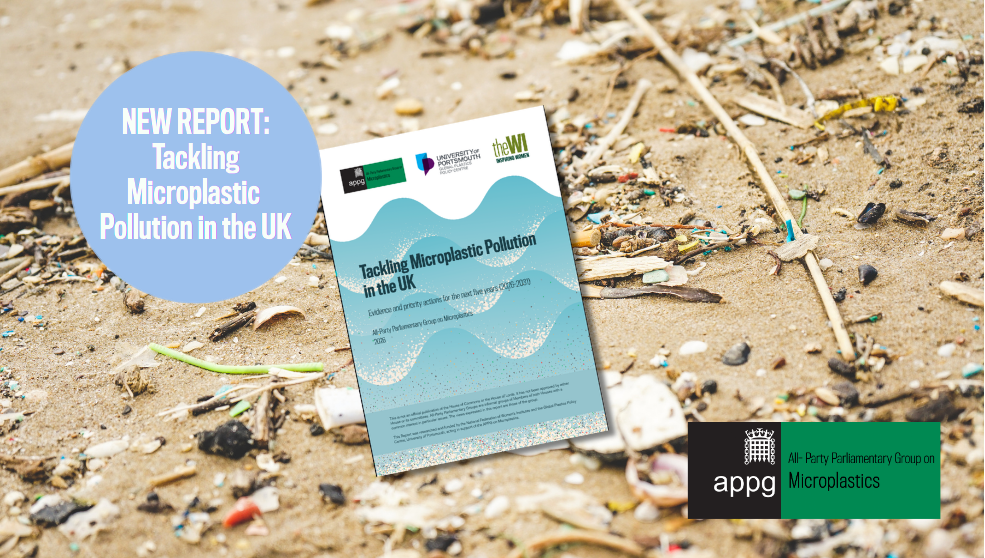
Five years on from the APPG on Microplastics’ first report, we’re launching our second report in collaboration with the Women’s Institute and the Global Plastics Policy Centre at the University of Portsmouth. Bringing together evidence from experts, industry, regulators and civil society, this report for the first time, provides a comprehensive assessment of the scale of microplastic pollution in the UK, and sets out a practical package of actions that could be implemented over the next five years.
Microplastic pollution has emerged as a major environmental, public health and economic challenge for the UK. Once considered primarily a marine pollution issue, microplastics are now recognised as a persistent contaminant found throughout the environment, food systems and the human body.
The report highlights rapidly growing evidence that people are continuously exposed to microplastics through food, drinking water, the air they breathe and everyday consumer products.
These impacts have wider economic implications. Microplastic pollution creates costs across healthcare, agriculture, fisheries, waste management and environmental restoration, while declining soil quality and reduced crop productivity pose longer term risks to food security.
Despite the rapidly expanding evidence base, the report concludes that the UK’s policy response remains fragmented. Existing measures address only a small proportion of microplastic emissions and there is currently no overarching strategy, no legally binding reduction targets and no coordinated framework to reduce releases across the largest sources and pathways.
The report identifies five priority areas that together provide a practical and achievable framework for reducing microplastic pollution over the next five years:
- Establish a clear UK policy framework with legally binding targets and coordinated leadership.
- Regulate the largest sources of microplastic releases through upstream product and design measures.
- Strengthen producer responsibility and economic incentives to reduce releases across the plastics lifecycle.
- Improve wastewater, sewage sludge and soil protections to reduce major environmental pathways.
- Build a coordinated national monitoring and evidence system to support regulation, evaluate progress and inform future policy.
For more information about the report and how you can support, contact the APPG secretariat on pa@nfwi.org.uk
Relevant Interest Declared: The National Federation of Women’s Institutes provides the Secretariat to the All-Party Parliamentary Group on Microplastics, of which Mr Costa is the Chair.