
The APPG on Microplastics’ second report shows microplastics a threat to food security and human health
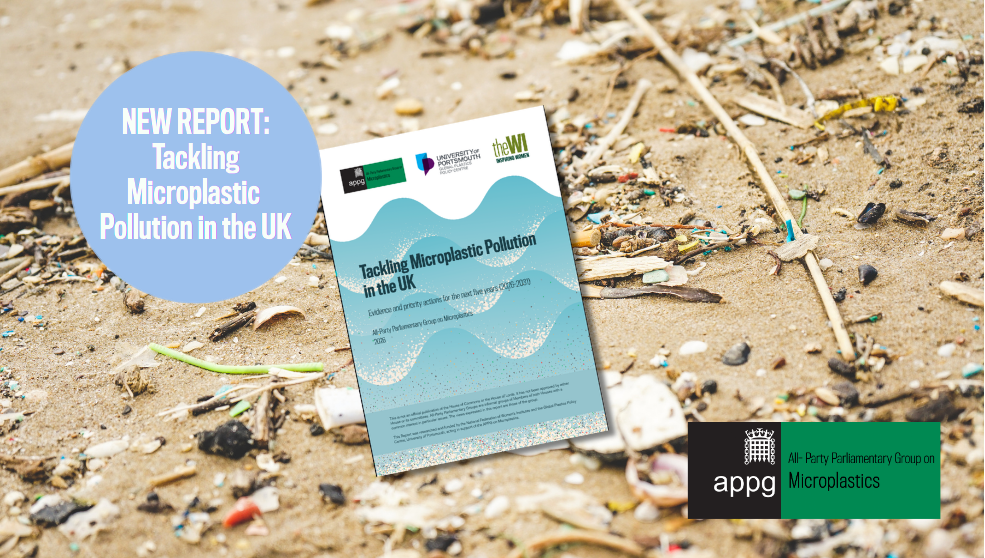
Microplastic pollution has emerged as a major environmental, public health and economic challenge for the UK. Once considered primarily a marine pollution issue, microplastics are now recognised as a persistent contaminant found throughout the environment, food systems and the human body.
This week, the APPG on Microplastics, for which the WI provides the secretariat, has published its second report in collaboration with the Global Plastics Policy Centre at the University of Portsmouth. Here is what we found:
Human health is becoming a central policy issue. The report shows that there israpidly growing evidence that people are continuously exposed to microplastics through food, drinking water, the air they breathe and everyday consumer products.
Our food system is of particular concern. Microplastics accumulate in agricultural soils through multiple pathways, particularly through the application of sewage sludge to farmland. Evidence shows that microplastics can alter soil structure, disrupt microbes, reduce water retention and interfere with nutrients, with implications for soil fertility and long term agricultural productivity.
These impacts have wider economic implications. Microplastic pollution creates costs across healthcare, agriculture, fisheries, waste management and environmental restoration, while declining soil quality and reduced crop productivity pose longer term risks to food security. As climate change places increasing pressure on agricultural production, protecting our food production is increasingly important.
The UK is falling behind in addressing microplastics. Despite the rapidly expanding evidence base, the report concludes that the UK’s policy response remains fragmented. Existing measures address only a small proportion of microplastic emissions and there is currently no overarching strategy, no legally binding reduction targets and no coordinated framework to reduce releases across the largest sources and pathways.
What are we calling for:
The report identifies five steps the government must take in the coming 5 years:
- Establish a clear UK policy framework with legally binding targets and coordinated leadership.
- Regulate the largest sources of microplastic releases through upstream product and design measures.
- Strengthen producer responsibility and economic incentives to reduce releases across the plastics lifecycle.
- Improve wastewater, sewage sludge and soil protections to reduce major environmental pathways.
- Build a coordinated national monitoring and evidence system to support regulation, evaluate progress and inform future policy.
These steps are needed for a coordinated approach that preventative microplastic pollution before it reaches across the entire plastics lifecycle.
While research into long-term impacts is ongoing, it is clear that preventing microplastic pollution at source should be a priority. Delaying action is likely to increase future risks and costs, whereas early intervention provides the greatest opportunity to protect public health, strengthen food security and support long term economic and environmental resilience.
If you are a WI member or supporter, check out how you can get involved on MyWI.
Check out our blog from last year's Week of River Action about microplastics and sewage.
Relevant Interest Declared: The National Federation of Women’s Institutes provides the Secretariat to the All-Party Parliamentary Group on Microplastics, of which Mr Costa is the Chair.